Episode #63: The Science of Canine Cognition and Connection with Evan MacLean, PhD
 How do dogs think, and why do humans share such a powerful bond with them? In this conversation, Dr. Victoria Maizes and Dr. Andrew Weil sit down with Dr. Evan MacLean, director of the Arizona Canine Cognition Center at the University of Arizona, to explore the science behind the canine mind.
From how dogs understand verbal language and read human emotions to the role of oxytocin in strengthening our connection, Dr. MacLean shares the research on canine cognition, attachment, and canine aging. The discussion also dives into the groundbreaking Dog Aging Project, which aims to uncover insights that could extend both canine and human healthspan.
Join us to hear how dogs experience the world and what they can teach us about connection.
Please note, the show will not advise, diagnose, or treat medical conditions. Always seek the advice of your physician or healthcare provider for questions regarding your health.
Play Episode





Dr. Victoria Maizes
Hi, Andy.
Andy
Hi, Victoria.
Dr. Victoria Maizes
We are going to be talking dogs today, one of your favorite subjects.
Andy
Yes. And we're going to be talking with Doctor Evan McClain, who heads a dog cognition center at the University of Arizona.
Dr. Victoria Maizes
So interesting. Let's get him on.
Dr. Victoria Maizes
Doctor Evan McLane is the founder and director of the Arizona Canine Cognition Center at the University of Arizona. He earned his Ph.D. in evolutionary anthropology from Duke University. Doctor McClain integrates research methods from evolutionary biology and comparative psychology to study the mechanisms through which animals represent and reason about the world. He also studies the biological mechanisms of human animal interaction.
Welcome, Evan.
00:00:59:20 - 00:01:02:00
Dr. Evan MacLean
It's great to be with you.
00:01:02:02 - 00:01:06:09
Dr. Victoria Maizes
What made you want to study how dogs think?
00:01:06:11 - 00:01:38:02
Evan
My path to studying dogs was kind of rounded out. I actually began my career really interested in the human mind and specifically the evolution of the human mind. And so I was interested. You know, when you look around the world, there's all these incredible animals out there, but humans seem very different than other species. And so I was trying to understand, what is it that allows humans to have culture to look for life on other planets, to invent the internet when it seems like our closest living relatives are, by and large, looking for fruit in African rainforests, so is there, you know, particular cognitive change that can explain that.
And I was very lucky to do a lot of work with primates in my graduate training. And I work with chimpanzees and bonobos, our two closest living relatives in Africa. And during that process, there were some discoveries that started coming out about dogs, suggesting that dogs in some ways, dogs may be more similar to humans than our closest living relatives.
And that got me really excited about dogs. I started working with dogs, and then I found out that they were fascinating on so many different levels. And so I've just sort of gone further and further from there.
00:02:08:09 - 00:02:26:18
Andy
Scientists have been very reluctant to admit that species other than us are our thinking or conscious. I think now there's some grudging admission that dogs are, but it's still been very slow to extend that to other species. Is that changing?
00:02:26:20 - 00:02:50:17
Evan
I think that is changing. Not long ago, there were basically unofficial rules when you worked with animals in science and animals didn't have names. They had, you know, numbers. You worked with pigeon number 104. You didn't work with Bob or whatever his name was. And a lot of that has changed. And I think especially when we're working with dogs, the sort of old or historical views have gone out the window, and there's a whole field of study devoted to animal sentience and the study of consciousness in animals.
Right now, I think much more acceptance that the mental lives of animals are very rich and very similar to humans in important ways.
Dr. Victoria Maizes
So when you think about that, it makes me wonder the extent to which dogs understand language. And, you know, one thing I've been told, I don't know if this is true or not, is that when you say no to a dog, what they understand is, oh, she does like that. So, for example, when I would tell my dog no about getting on the couch, my dog's interpretation was I should do that when she's not around because she doesn't like to see that.
00:03:28:05 - 00:03:46:17
Evan
Well, that's a very clever response. I don't know what it says about your dog. You know, I think that when we use language with dogs, dogs are able to sort of map some of our language onto functional things that they would have in their own interactions with other dogs or, you know, going back in evolutionary history. Well, so, you know, dogs have lots of ways of telling each other, no, stop that.
I don't want you to do that. And I think dogs very quickly pick up that. Those are things that we do with our language. We also, you know, it's interesting there are some kind of, universals in vocal communication that we use in communication with dogs, too, that people are not necessarily conscious sounds, but lots of times agonistic or sort of aggressive signals.
They correspond to vocalizations that have a very low charge. And so if you pay attention to the way that you talk to your dog, probably when you say no, you're saying it in a pretty low pitch, sharp tone of voice that, you know, maps on pretty neatly to the kinds of vocalizations that dogs might make in that context.
Whereas when you're praising your dog, you're using a very high sing songy voice, the kind of voices with babies. And we know through scientific research that dogs are actually very sensitive to those differences in human vocalization. So they love the mother use kind of talk.
Dr. Victoria Maizes
So are you saying that rather than dog learning human speech, we should learn dog speech?
00:04:40:18 - 00:04:50:02
Evan
Boy, I think dogs do a lot better understanding us than we do understanding them. So absolutely, I would advocate that we all learn a little bit more dog than we currently know.
00:04:50:04 - 00:05:10:04
Andy
I've lived with dogs for a very long time, and one of the things that I like about that is it's really improved my nonverbal communication that I really understand what my dogs want or what they want to say, and I think they understand and it's without language. And I think that's been very valuable.
00:05:10:06 - 00:05:25:16
Evan
I think it's a great privilege that we have as dog owners, and that we can all be ethologist to some extent. Right? We're all naturally observing and learning about the behavior of animals, and that no doubt improves our interactions with dogs. But I think that those are skills that go a long way. The attractions of people as well.
00:05:25:18 - 00:05:44:10
Dr. Victoria Maizes
It's amazing what strong emotional bonds people form with their dogs. I've certainly seen that to be true of you. Andy, can you say anything about what the science is teaching us about what makes that such a strong bond?
00:05:44:12 - 00:06:02:13
Evan
100%. We know that bonds we formed with dogs are very deep. We know that when people lose a pet in their family, they often experience grief. That is very similar to if you have lost a human family member. We know even in very young kids, lots of young children will talk about their pets. It's their best friend. They share secrets with their pet.
00:06:02:13 - 00:06:24:07
Evan
They confide in their pet when they're sad. And actually, some studies show that young kids have better relationships with their pets than they do with their siblings. So we think that, you know, from very early in life, we have these very rich opportunities to have relationships with dogs. And we also know that the sort of nature of those social bonds that dogs form with us are very similar to the social bonds that babies form with parents.
So there's a very sort of rich body of literature and psychology looking at attachment relationships between infants and their parents. And there are a lot of similarities in the attachment relationships you see between babies and their parents and between dogs and the families that they live in.
00:06:39:03 - 00:06:47:19
Dr. Victoria Maizes
Andy, you have had ridge backs for as long as I have known you. Yeah, I've read facts. What makes that such a special breed?
00:06:47:20 - 00:07:05:12
Andy
Well, I was given a female ridgeback puppy for my 40th birthday. And the woman who gave her to me, it was a longtime friend. I was very rootless at that point in my life. And I said to her, I really can't take a dog, you know, I don't have anywhere to live. And she said, well, it would settle you.
00:07:05:14 - 00:07:22:17
Andy
So it was just by chance that I got a ridgeback. But that's the breed that I know really well. You know, I understand them. There are many qualities about them that I like. They're very even tempered. They can lie around endlessly. They're not hyper. I like them. I have three of them now, which is more than I usually have.
Evan, you've met two of them? I have. Let me see if I can. They're a little Tajik at the moment, but let me see if I can tilt the camera so you might get a glimpse of them doggies. They are, you know, they're lying on the floor looking very nervous.
I took them to Evan's lab, two of them, and we did a little testing of them.
Dr. Victoria Maizes
What kind of test did you do?
00:07:51:06 - 00:08:08:12
Evan
Well, they participated in some tests looking at cognitive aging. And dogs were very interested in sort of how cognitive function holds up as dogs live into their senior years. And increasingly, dogs are living longer and longer. Veterinary medicine has come a long way, and we're able to treat a lot of physical diseases that we weren't in the past.
So as a consequence of that, dogs are living longer and longer, but we haven't necessarily kept up and being able to take care of their cognitive health. And there's a lot of evidence that dogs will develop patterns of cognitive decline and in some cases, forms of dementia that look a lot like dementia in humans and specifically Alzheimer's disease.
So we're very interested in those parallels because we think there are opportunities to not only advance what we're doing in veterinary medicine to take care of the mental health of our pets, but to make discoveries that that translate into human medicine as well.
00:08:39:10 - 00:08:41:22
Dr. Victoria Maizes
That's fascinating. How'd you dogs do, Andy?
00:08:41:24 - 00:08:45:23
Andy
I think they did moderately well.
00:08:46:00 - 00:09:02:20
Evan
Yeah, they were great. And every dog had their own baseline. That is, we say we like to follow these pups longitudinally. And it's the wonderful thing about working with dogs is that they're all different. So it's very hard for us if we see a dog once to know how that dog's mind is doing. But if we can see a dog every six months or so, that's where we can really begin to see.
00:09:02:20 - 00:09:04:10
Evan
Are there cognitive changes happening?
00:09:04:13 - 00:09:23:12
Andy
Well, we'll bring them in again. You know, my female is now 11 and I told her she's on rapamycin. She's been on rapamycin for two years. And she's great. I mean, she's really spry and active and we'll see what happens. But, you know, she's not acting like other 11 year olds that I've had for sure.
00:09:23:12 - 00:09:41:15
Evan
And a dog of that size 11 is a remarkable achievement. So for listeners who don't know, there's a really interesting pattern in dogs where large dogs are much shorter than small dogs. And that's kind of the opposite of what you see when you look across species. So, you know, in general, small species are very short lived. Large species are long lived.
00:09:41:17 - 00:09:49:11
Evan
But within species you see the opposite pattern. And that plays out very clearly. And so a dog like a ridgeback making it to 11 is a real milestone.
00:09:49:13 - 00:10:08:16
Andy
Now what about the specialness of the dog human interaction? You know, I understand that dogs are the only species that holds our gaze. You know, most animals avoid looking us in the eye, and dogs have evolved to be able to do that. And that's part of the bond there. So I think it is a very special relationship.
00:10:08:18 - 00:10:29:21
Evan
It is. And, you know, I gaze is a very sort of primate centric thing and in a lot of ways, even a human centric thing. But we know going back to this idea about the bond between infants and their parents, that eye gaze is a critical component of that that comes online very early, you know, before babies are producing any language or gesture and a lot of eye contact and communication that way.
00:10:29:23 - 00:10:44:21
Evan
And what we and other scientists have found with dogs is that when dogs gaze into a person's eyes, this can actually trigger a release of the hormone oxytocin, which is a hormone that has been identified as a really important factor in the development of social bonds.
00:10:44:23 - 00:10:45:23
Andy
And the dog.
00:10:46:00 - 00:10:52:07
Evan
That is in both and us and the dog. So it's really interesting and it seems to be a bidirectional phenomenon.
00:10:52:09 - 00:11:01:06
Andy
And what about the claim that dogs can read emotions, that they have evolved to read our emotions and respond appropriately?
00:11:01:08 - 00:11:23:08
Evan
So I think to answer that question, we first have to unpack the idea that there are lots of different kind of emotions, and we think that humans probably have some emotions that dogs don't have and don't understand if we talk about moral emotion specifically, but if we talk about basic emotions, if we talk about joy, if we talk about fear, these are emotions that dogs certainly have and can respond to some extent in human behavior.
00:11:23:10 - 00:11:41:08
Evan
What we don't know is, you know, does the dog actually understand that this person is having a fearful reaction or are they picking up on these are behavioral cues that, you know, are associated with fear, and they've learned how to respond adaptively, but increasingly there's new evidence coming out all the time just showing the sensitivities that dogs have in this area.
00:11:41:08 - 00:11:49:22
Evan
And sometimes they're even doing it with olfaction so they can smell a sweat sample, for example, and get an idea about the affective state of a person.
Dr. Victoria Maizes
I know there's some really interesting research on the use of service dogs for veterans with PTSD, where the dog is able to sense when someone is particularly anxious or hypervigilant, and then the dog steps in. They've taught the dogs to lick the faces of their owners when they're having a nightmare. So the service dogs, which is obviously very highly trained dogs, seem to very much be able to read and respond to people's emotions.
00:12:21:09 - 00:12:42:16
Evan
That's right. And there are a lot of mysteries about how they do that. We're trying to develop ways to tap into what they're responding to so that we can train it better. But a lot of the practice in service dogs for these kinds of applications have picked up on things that happened naturally. So there were, you know, spontaneous, anecdotal observations of a dog responding to a particular state that a person was in.
00:12:42:16 - 00:12:59:05
Evan
And it sparked ideas that, well, could we find a way to, you know, harness this and have dogs regularly help with this? So we see it in lots of different domains. So post-traumatic stress and nightmare interruption is one that you just talk about. We also see a diabetic alert dogs you pick up on when somebody's blood sugar is going low.
00:12:59:05 - 00:13:18:16
Evan
There's a lot of interest in dogs for seizure detection. That's we don't know quite as much there. But there are a lot of things that dogs are able to pick up on in ways that are probably even better than what we can do as humans, because a lot of those signals may be olfactory in nature. And so if dogs can get some of those olfactory cues that we're a little bit blind to, they can do a lot of great work.
Dr. Victoria Maizes
Yeah, I know some of the new research suggests that dogs can use olfaction to diagnose Parkinson's much earlier than we can do it with our other kinds of testing.
00:13:31:04 - 00:13:32:10
Andy
In cancer, and.
00:13:32:10 - 00:13:56:19
Victoria
Cancers. Right. Which is so fascinating. You know, I know people are always interested in what what kind of dog should they get? And we talked a little bit earlier and you said what a great disposition your dogs had, and in a sense a good match for what you want. Do you have any advice for people? How do you go about choosing the right dog, especially, for example, if you're going to an animal shelter?
00:13:56:21 - 00:14:14:21
Evan
So it's a tricky thing because you can sort of make a probabilistic guess as to, you know, if I get this type of dog, there's a decent chance it will be a little above average or a little below average on some trait that you might care about, but it's never a guarantee. And this is the truth about the genetics of behavior and personality in humans and in dogs.
00:14:15:02 - 00:14:36:21
Evan
It's a very has a very complex genetic basis. There are lots of sort of factors at play, and we can find some sort of genetic signal that tell us that certain breeds may be more likely to engage in certain behaviors, but there's almost always an enormous overlap in the distributions between different breeds. So the first piece of advice that I give people is just to have very reasonable expectations.
00:14:36:21 - 00:14:54:23
Evan
You know, if you want a lovely dog who's going to be happy go lucky, you know, a golden retriever might be a great dog for you. But, you know, it's possible that the golden retriever that you get in the way, that you raise that dog, you're not going to get you what you're looking for. So I think the first step is just to be open minded and to recognize that there's a lot of moving pieces in the equation.
00:14:55:00 - 00:15:09:01
Evan
Ultimately, it's a personal fit. You know, the same dog raised in two different families will come out in different ways. And so a lot of times you have to hope for the best. And I would like to think that if you put love and nurture into the equation more times than not, things are going to work out well.
00:15:09:03 - 00:15:28:07
Andy
When dogs sleep and have periods of twitching and yelping and and you know, my female has some quite violent episodes. You know, when people commonly say that dogs are dreaming and they're chasing rabbits or those REM periods, and do we have any idea about what's happening in a dog's brain at that time?
00:15:28:09 - 00:15:43:05
Evan
So to the best of our knowledge, those are REM periods. And people have done a number of studies recording from the brain in dogs while they're sleeping. It looks as much like REM sleep in humans as anything that we've been able to study in animals, of course, but we don't know our, you know, what is the subjective content of that dream?
00:15:43:05 - 00:15:48:18
Evan
So the REM is happening, but is the dog chasing a rabbit? That is something that we still can't tell you in a dog or a human.
Dr. Victoria Maizes
What surprised you the most on your research of cognition of dogs? Like what are some things that you didn't expect?
00:15:56:23 - 00:16:16:15
Evan
One lesson that I just learned every day studying the lines of animals, is that intelligence comes in lots of different flavors. And so we started this conversation by talking about the study of humans and how we're different from other animals. But we find evidence for amazing cognitive abilities in animals that in a lot of cases, can surpass what we do as humans.
00:16:16:15 - 00:16:34:00
Evan
Right? So you can find birds and rodents that make a living by hiding seeds or nuts that they have to come back and dig up three months later, and they can remember where thousands of these things are. Right? And, you know, I always say that I have a PhD, but it's, you know, every other morning that I can actually find my car keys and time to get out of the house.
00:16:34:00 - 00:16:50:14
Evan
Right? It's like spatial memory is not my thing. And so any that we're studying an animal, you know, we're not trying to answer this question of how smart is this animal? We're trying to answer what I think is the much more interesting question of, you know, in what way is this animal smart? And so we really see that in dogs.
00:16:50:14 - 00:17:16:15
Evan
There are ways that dogs, in terms of their social intelligence, seem to outperform our closest relatives chimpanzees, bonobos. But there are other things that are very basic to us as primates in our understanding. For example, the physical world that dogs find just, you know, unbelievably challenging to understand. And so depending on what I'm showing you, I can take a test and I can make a dog look like a genius, and I can make a dog look like they don't have a brain, depending on the particular problem that they're solving.
00:17:16:15 - 00:17:28:16
Evan
And I think that's been one of the really interesting surprises in dogs as we week different aspects of their cognition, where you find that, wow, they're really unusual here. But if we look at another area, maybe not so much.
00:17:28:18 - 00:17:49:06
Andy
Most dogs are totally foiled by doors, and they must dream, you know, about being able to do that. I had one male ridgeback. They could open doors. He could turn a doorknob with his mouth or move a door handle down and get into pantries and eat as much food as he could get. So that's the only dog I've seen do that.
00:17:49:08 - 00:18:04:01
Victoria
And I had a dog who would knock on the door with his fingernail. Now he had a dog door, but it was around the other side of the house. He was like, why should I do that? You're sitting right there. Open the door for me. You just tick, tick tick tick tick. When he wanted to come in. Yeah.
00:18:04:02 - 00:18:05:20
Evan
Very polite, but yes.
00:18:05:20 - 00:18:14:11
Victoria
So when you're designing these studies, are you working in some way to get into a dog mindset?
00:18:14:13 - 00:18:31:06
Evan
We try to we don't know how good we are at this, you know. And it starts at the level of perception. Right. Because we take for granted that as humans, you know, we see the world in certain ways that dogs don't see. Dogs smell things that we often don't smell. So, this is one of the big challenges in studying animal minds.
00:18:31:06 - 00:18:49:21
Evan
And in general, it's something called the unfelt, which is sort of the unique set of sensory experiences that an organism has. And we can never experience that directly, but we can learn about it indirectly, and we can try to design things in ways that are sort of most accommodating to the way that animals experience the world. So, you know, it's just one example.
00:18:49:23 - 00:19:07:12
Evan
Part of the dog comes out right there. Yeah, yeah. So we we are attending to that dogs, you know, in general learn things that involve spatial decision making very quickly. But they if they have to learn about sort of arbitrary distinctions that the, you know, the color yellow is associated with one thing and the color blue is associated with another thing.
00:19:07:17 - 00:19:15:12
Evan
That's a very hard thing for them to learn. I'll take them hundreds and hundreds of tries, whereas if you turn it into a spatial problem, they'll learn it. And probably two tribes.
00:19:15:14 - 00:19:24:14
Victoria
Based on what you know about a dog's umwelt. Are there recommendations you'd give to dog owners to make for a happier life, for the dog to pick?
00:19:24:14 - 00:19:45:10
Evan
The big one that is hard for a lot of people is to recognize that the way that dogs interact with each other socially is often at odds with things that are natural to us as primates. So primates hug, right? And, you know, if you go study chimpanzees in nature and there's something scary that happens, you will see, you know, a baby run to its mother and, you know, wrap her arms around a mom.
00:19:45:10 - 00:20:00:19
Evan
And it's a very kind of thing. And we love to do that as humans. It's one of our first instincts when we see this, you know, beautiful dog in front of us that we want to get up and we want to put our hands all over it and embrace it. And for dogs, that's a really scary thing, because you know, number one, they tend not to approach each other head on in that way.
00:20:00:19 - 00:20:18:01
Evan
It's much less threatening if you sort of approach from the side. And, you know, certainly the act of something like a hug for a dog that's being physically restrained and that's a really stressful thing. So I think the challenge is for a lot of people is, you know, first, learning that little bit of dog to understand how might a dog perceive this?
00:20:18:01 - 00:20:25:11
Evan
And then second is putting the brakes on some of our impulses for things that are gratifying for us, but are probably not gratifying for the dog.
00:20:25:13 - 00:20:44:00
Andy
I advise friends who have one dog to get another. I think it is a shame to leave a single dog alone for periods of time. I've always had two dogs at least, and I think that's I don't feel bad about going out of the house, and I think they keep each other company in a good way.
00:20:44:02 - 00:20:58:21
Evan
Yeah. That's great. It's one of the amazing things about dogs is that they form these deep relationships both with people, but of course with other dogs. And if you can give them some of that, that's really good for them. I think it's not a coincidence that dogs are carnivores who can spend large parts of their day sleeping as well.
00:20:58:21 - 00:21:12:08
Evan
You know, if you tried to domesticate an animal that needed 18 hours of, you know, awake time, I think that would be a challenge. It's not an accident that that we've been able to domesticate animals that are willing to have a lot of sort of just downtime and unique company.
00:21:12:10 - 00:21:32:12
Victoria
One of the things that you have been researching, you alluded to it earlier, are oxytocin and vasopressin and the ways in which those can actually affect dogs behavior. And I'm wondering if you could share a little bit of what you've learned in your research about those chemicals, which we as humans have in our bodies, too?
00:21:32:14 - 00:21:52:10
Evan
Yeah. So it's a really hot area of research. There's honestly more that we don't know than we do now, but we in several studies that were done with rodents, there were discoveries that in the formation of pair bond. So when a male and a female meet each other and they're going to become life partners, that the release of oxytocin in the body is really critical for the formation of that bond.
00:21:52:10 - 00:22:11:14
Evan
And so if you those the animals had a social experience that would normally lead to that, but you block the actions of oxytocin, the bond doesn't form. So based on those kinds of early studies, we know that oxytocin plays this really critical role in bonding. And it seems to be something that that happens naturally and spontaneously in our interactions with dogs.
00:22:11:14 - 00:22:34:01
Evan
There are certain kinds of behavioral exchanges that seem to trigger more oxytocin release and we talked about one of them earlier, which is eye gaze. So looking into each other's eyes can be a potent trigger for oxytocin release. And in one really fascinating study, scientists administered oxytocin to dogs to give them a little bit of an oxytocin boost and look at how it changed their behavior.
00:22:34:03 - 00:22:56:01
Evan
And when the dogs received oxytocin, it actually caused them to gaze more into the people's eyes. And then that caused the people to have more of an oxytocin response in turn. So there's this sort of feedforward mechanism where if the dog gets some oxytocin, it increases social behavior towards the person, and by virtue of that, the person gets their own oxytocin surge that then may change their behavior and return.
00:22:56:03 - 00:23:06:04
Victoria
Really interesting. Andy, you often talk about another dog behavior that is good for our health and it's dog kisses. You want to say anything about those?
00:23:06:06 - 00:23:24:21
Andy
Yeah, I've had several dogs that really like to put their tongue in my mouth and sometimes catch me unawares and jump up. I actually think that it's useful. I think there's some evidence that this is good for our gut microbiome. And, you know, even though we think dogs lick all sorts of things that we might consider nasty, I think it's okay.
00:23:25:01 - 00:23:41:17
Evan
I think you're right. And there's very solid evidence that kids who grow up with pets have reduced allergies, as you well know. I talk about in a lot of ways, the modern world is too clean, and dogs present us with an opportunity to sort of tap into something that might be a little bit more representative of the conditions humans evolved in.
00:23:41:19 - 00:23:45:02
Victoria
And where is your research going next? What are you excited about?
00:23:45:04 - 00:24:03:21
Evan
Well, I am very excited about the work that we're doing on aging, in part because I'm part of a large group of scientists that's running a study right now called the Dog Aging Project, which is an unprecedented study in that we've brought together a team of scientists throughout the United States to do a longitudinal study of aging and about 50,000 dogs.
00:24:03:21 - 00:24:26:03
Evan
And that is in the scheme of animal research. Nobody's ever done a study of this size. We're really excited about it, because we think that there are so many important parallels in the lives of dogs and humans that we can learn a tremendous amount about factors influencing healthy aging in dogs. Of course, the one thing that is an important difference between dogs and humans is that a dog life span might be a decade, right?
00:24:26:03 - 00:24:58:07
Evan
Whereas humans might live 80 years. So we can make discoveries in dogs much more quickly than we can in humans. And so we're hopeful that we're going to learn some things very quickly with this cohort about healthy aging that will not only help dogs, but will help people as well. And one of the things that we're doing in this study is something that Andy talked about earlier, which is we're looking at the effect of rapamycin on the ability to extend dog lifespan and and healthspan, which is really the concept that we care most about an aging, the sort of period of life that we can spend free from disease and disability of aging.
00:24:58:09 - 00:25:05:16
Evan
So we're excited about this. And, you know, we hope we might be able to discover some things that will help that stay in our lives a little bit longer.
00:25:05:18 - 00:25:11:11
Andy
I'd like to bring Juno in again and have you assess her and see how you think she's doing.
00:25:11:13 - 00:25:13:24
Evan
We would very much like that to.
00:25:14:01 - 00:25:32:03
Victoria
Awesome. Well, I think this has been a fascinating conversation and really interesting to hear about the breadth of your work with dogs. And I know that we have lots of listeners who love dogs and care for dogs. And so thank you so much for sharing your expertise.
00:25:32:05 - 00:25:35:14
Evan
Thank you. It was incredible to be here.
00:25:35:14 - 00:25:41:23
Unknown
You.
Hosts
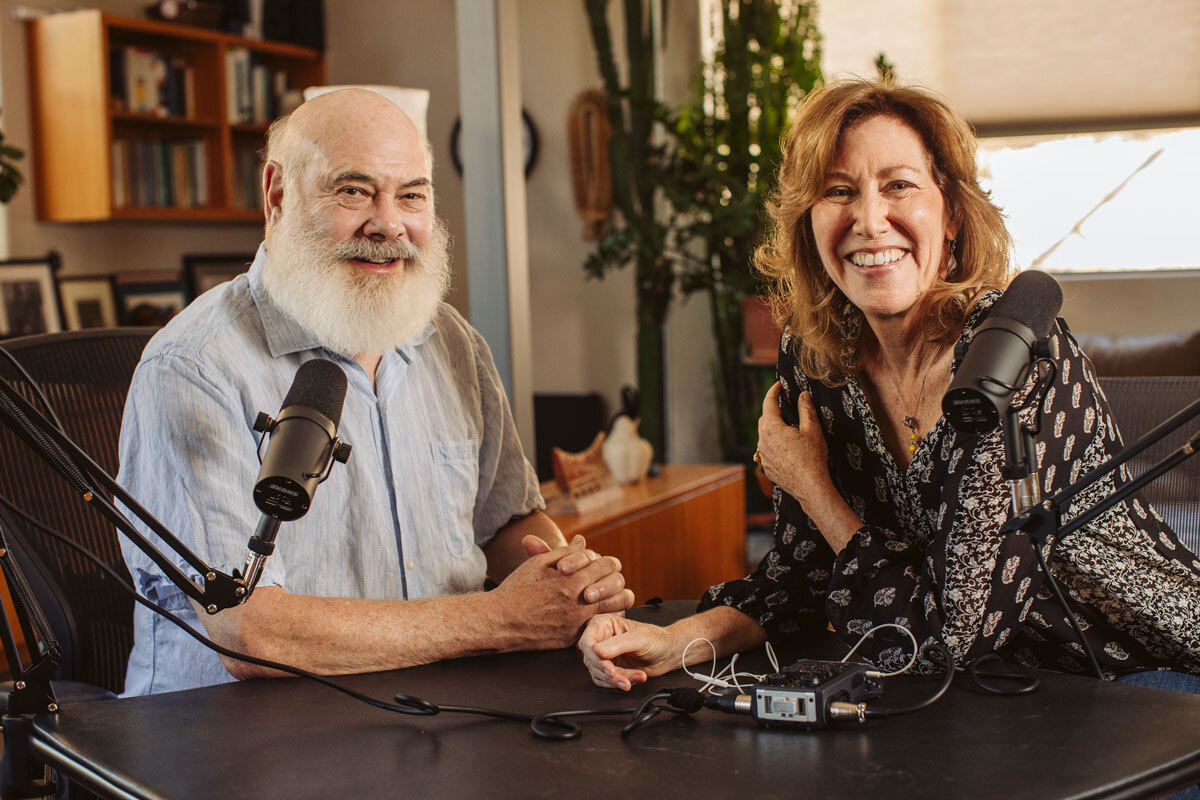
Andrew Weil, MD and Victoria Maizes, MD
Guest
@bodyofwonderpodcast
www.facebook.com/bodyofwonderpodcast
@bodyofwonder
Connect with the Podcast
Join the Newsletter
Be the first to know when there is a new episode.
Send the Show Your Questions
Submit a question for our hosts or suggest a topic for future episodes. We'll try to answer as many questions as we can on the show.