Patient Education Library
Designed for both clinicians and the general public, these handouts provide practical, evidence-informed guidance that blends conventional medicine with complementary strategies. Within each handout you have the option to share or download a PDF.

Anti-Inflammatory Diet: Quick Eating Tips
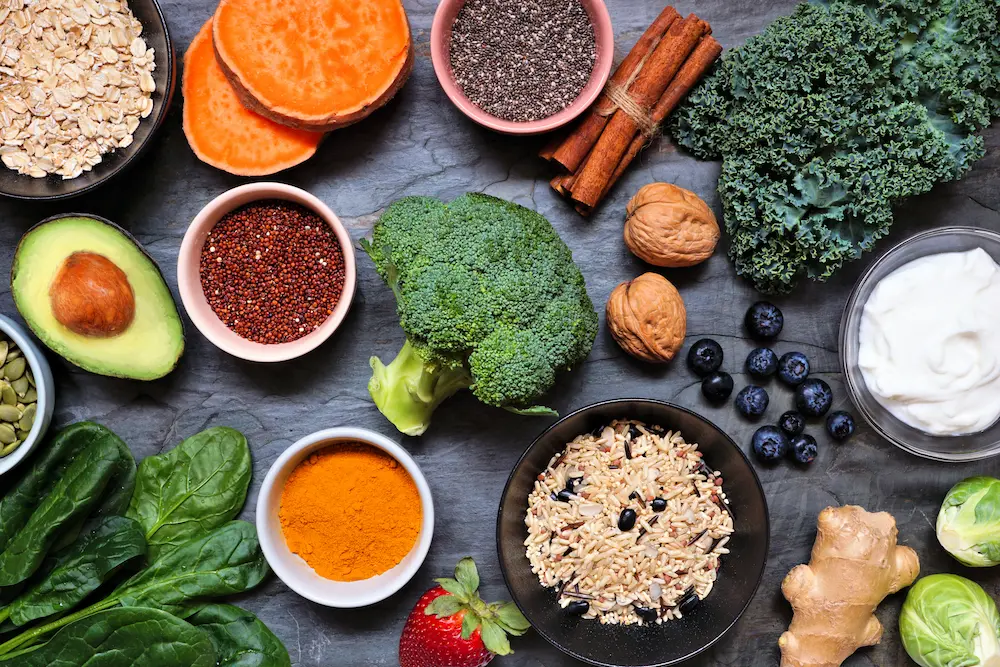
VEGETABLES & FRUITS
- "Vegetables and fruits" instead of "fruits and vegetables" to emphasize plants with a lower glycemic load.
- Eat a variety of vegetables and fruit—try to cover as many colors in the natural spectrum as possible.
- Eat plenty of cruciferous vegetables.
- Include soy—edamame, tofu, and tempeh.
- Consider organic produce when possible.
- In-season items are generally cheaper and most nutrient-rich.
- If in-season varieties are unavailable, frozen forms are the next best option.
- Eat more fermented vegetables such as sauerkraut or kimchi for more fiber and microbiome support.
- Mushrooms are not all created equal. Explore Asian mushrooms such as maitake and shiitake rather than the more common button type. Always cook mushrooms before eating.
OTHER CARBOHYDRATES
- Whole and cracked grains are generally good choices. This is not to be confused with "whole wheat" or claims of "whole grains" on packaging. You should be able to see the grains.
- Pastas should be an occasional, not daily, part of the diet. Cooking al dente will lower the Glycemic Load.
- Consider the addition of vinegar to dishes as a quick, easy, low-calorie way to lower Glycemic Load.
- Many of the improvements in the fiber studies reviewed the inclusion of high-fiber cereal grains, a low-cost and very accessible change for many patients.
- Another means of increasing fiber intake is eating more berries and beans.
FATS
- EPA and DHA can be obtained from consuming cold-water fish such as salmon, sardines, and albacore tuna.
- Omega-3 fatty acids can be found in several plant sources, including walnuts and purslane.
- Fish oil supplements have data to support anti-inflammatory properties, as well.
- Foods high in monounsaturated fats include olive oil, olives, nuts, seeds, and avocado. However, these foods are calorie-dense, so the recommendation to incorporate them should always be couched with advice regarding appropriate serving size.
- Olive oil should be the main cooking oil. Other options include expeller-pressed, organic canola, avocado, and algae.
PROTEINS
- Choose fish rich in omega-3 fats, including wild Alaskan salmon (especially sockeye), herring, sardines, and black cod (a.k.a. butterfish or sablefish).
- Plants can be plentiful sources of protein, especially nuts and legumes.
- Best legume choices include Anasazi beans, adzuki beans, black beans, chickpeas, black-eyed peas, and lentils.
- Additional healthy protein sources include high-quality dairy and eggs.
- The high levels of omega-3s in grass-fed beef may offer a health advantage, though this hasn’t been proven.
PHYTOCHEMICALS
- Try new seasonings in your food: turmeric, curry powder, ginger, garlic, chili peppers, cinnamon, and other herbs and spices.
- Drink high-quality white, green, or oolong tea instead of coffee.
- Men who choose to drink alcohol should limit consumption to only two drinks a day and women, one drink a day.
- Enjoy dark chocolate in moderation (with a minimum cocoa content of 70 percent).
Disclaimer: Information provided is for general informational purposes only and is not a substitute for professional medical advice, nor does it establish a doctor-patient relationship. Always seek the advice of your qualified health provider. We assume no responsibility for errors or omissions in the content.
Find an Integrative Provider or Coach Near You
Search for integrative physicians and health experts. Partner with Andrew Weil Center-trained integrative providers who value your well-being, combine evidence-based methods to improve your health and merge conventional and natural approaches to address your mind, body, and spirit.
Visit the Tucson Clinic
Experience comprehensive care from Andrew Weil Center for Integrative Medicine clinic physicians, who offer expert consultations for various medical conditions while providing tailored recommendations for disease prevention.
Interested in becoming an integrative practitioner?
Ready to take the next step in your healing career? Discover how our educational offerings can help you blend science, compassion, and whole-person care. Enroll in our integrative health programs and gain the tools to combine modern medicine with holistic healing.
What is Integrative Medicine
Transform medicine and embrace whole person healthcare with an online course, in-person event, certificate program, or fellowship in integrative medicine.