Patient Education Library
Designed for both clinicians and the general public, these handouts provide practical, evidence-informed guidance that blends conventional medicine with complementary strategies. Within each handout you have the option to share or download a PDF.

Progressive Muscle Relaxation (PMR)
The above exercises have used the major muscles in the arms and started them relaxing. If you don’t move them around, they will continue to relax becoming more and more relaxed, and you can forget about them. PMR works on the premise that physical relaxation leads to mental relaxation. It involves contracting a muscle group for ~10 seconds, noticing the tension in those muscles and then releasing the tension bringing awareness to what the relaxed muscle feels like. This process is repeated by moving through the muscle groups in a specific order, either starting with the hands and traveling towards the feet or vice versa.
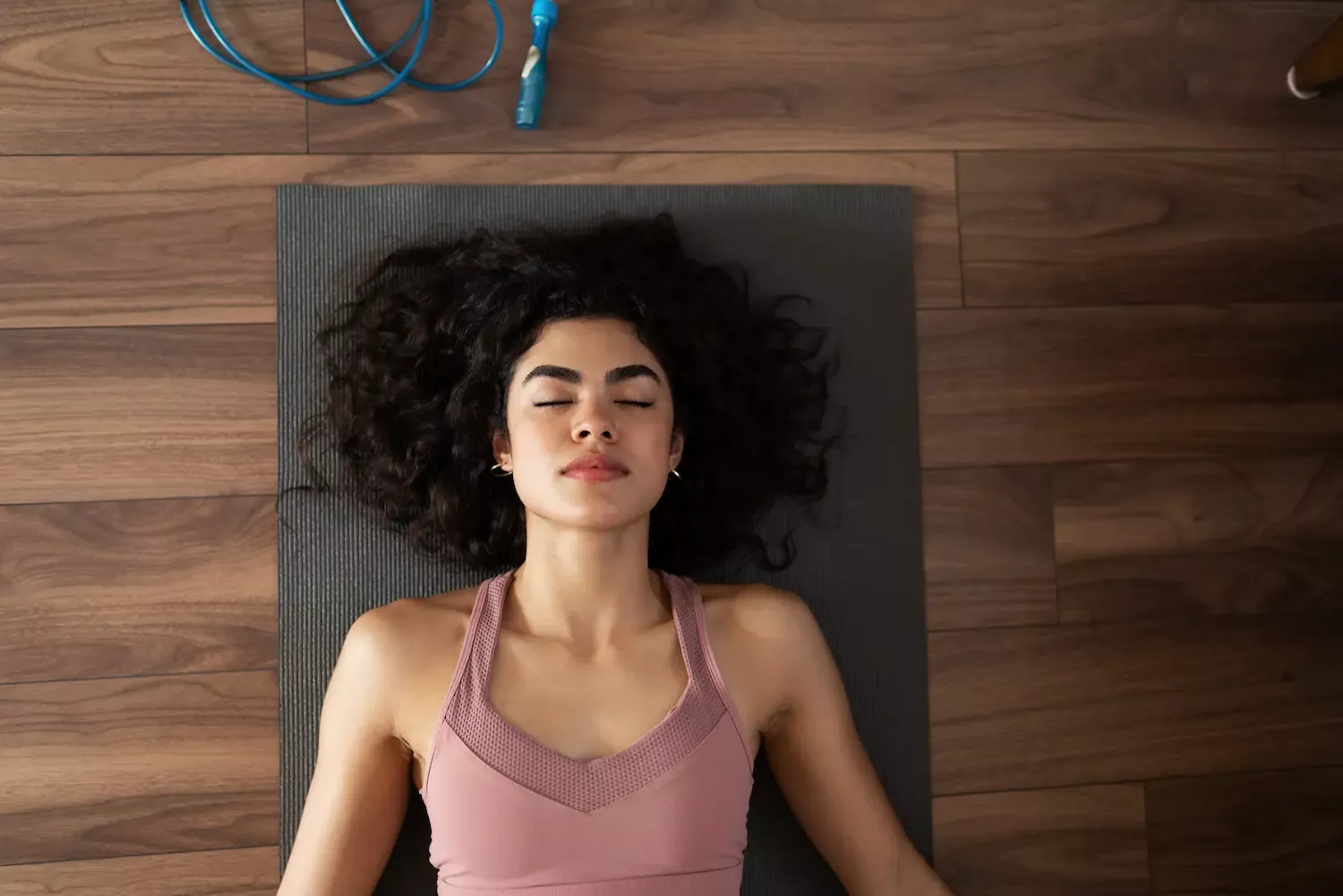
To practice PMR, wear loose, comfortable clothing and go to an area where you will not be disturbed. Sit or lie down comfortable. During PMR, contract muscles until you feel tension but not pain. If you feel significant pain, let it go and just breathe deeply.
HANDS
- While sitting quietly and comfortably, slowly inhale and exhale and close your eyes as you do so.
- Bend your right hand back at the wrist and briefly hold the tension.
- Now relax.
- Now do the same thing with the left hand. Hold the tension briefly.
- Now relax.
- This time tighten both hands into fists and hold the tension. Feel it spread up the arms towards the elbows.
- Now relax.
ARMS
- Now bend both arms at the elbows and raise your hands up towards your shoulders.
- Tighten up the muscles in the biceps. Hold it.
- Now relax.
FACE
- Next, turn your attention to your face. For your forehead raise your eyebrows up as far as you can and hold the tension.
- Now relax.
- For your eyes, squeeze the eyelids tightly together. Hold the tension.
- >Now relax.
- For your jaw, bite down gently and clamp your teeth together. Feel the tension along the jaw.
- Now relax.
NECK/SHOULDERS
- For your neck:
- Bend your head forward as if trying to touch your chin to your chest.
- Feel the tension along the back of the neck.
- Now relax.
- For your shoulders:
- Tense the muscles in your shoulders as you bring your shoulders up towards your ears.
- Next, push your shoulder blades back, trying to almost touch them together, so that your chest is pushed forward.
- Then breathe in deeply, filling up your lungs and chest with air.
HIPS
- For your hips and buttocks, squeeze your buttock muscles tightly.
- Now relax.
LEGS
- For your right upper leg, tighten your right thigh, and keep the tension for a few seconds, then relax.
- For your right lower leg, pull your toes towards you to stretch the calf muscle.
- Do this slowly and carefully to avoid cramps.
- For your right foot, curl your toes downwards.
- Repeat the above 3 steps for the left leg.
Disclaimer: Information provided is for general informational purposes only and is not a substitute for professional medical advice, nor does it establish a doctor-patient relationship. Always seek the advice of your qualified health provider. We assume no responsibility for errors or omissions in the content.
Find an Integrative Provider or Coach Near You
Search for integrative physicians and health experts. Partner with Andrew Weil Center-trained integrative providers who value your well-being, combine evidence-based methods to improve your health and merge conventional and natural approaches to address your mind, body, and spirit.
Visit the Tucson Clinic
Experience comprehensive care from Andrew Weil Center for Integrative Medicine clinic physicians, who offer expert consultations for various medical conditions while providing tailored recommendations for disease prevention.
Interested in becoming an integrative practitioner?
Ready to take the next step in your healing career? Discover how our educational offerings can help you blend science, compassion, and whole-person care. Enroll in our integrative health programs and gain the tools to combine modern medicine with holistic healing.
What is Integrative Medicine
Transform medicine and embrace whole person healthcare with an online course, in-person event, certificate program, or fellowship in integrative medicine.