Patient Education Library
Designed for both clinicians and the general public, these handouts provide practical, evidence-informed guidance that blends conventional medicine with complementary strategies. Within each handout you have the option to share or download a PDF.

Iron
WHAT IS IT?
Iron is an essential mineral necessary for oxygen transport and blood formation. It is an integral component of many proteins and enzymes and is therefore important for immune function, energy production, gene expression and thyroid function.
Iron comes in two forms, heme and non-heme. The heme form is from animal sources, such as cooked liver, beef, and the dark meat of chicken. The non-heme form is from plant sources, including several spices, tofu, and leafy greens. In the United States, most cereals are fortified with iron.
Both iron overload and iron deficiency lead to serious illness.
Do not take iron supplements without talking to your healthcare provider.
WHO MIGHT CONSIDER TAKING THIS?
DEFICIENCY:
Iron deficiency is the most common mineral deficiency in the world. Deficiency results in anemia, or low blood counts. Its symptoms include: feeling weak and tired, difficulty maintaining body temperature, and pale skin and gums. Anemia can be quite serious—it increases the stress on the heart and can even lead to heart attacks.
Iron is taken to replace deficiency. A healthcare provider should work to identify the reason for low iron prior to treating with iron supplements.
PREPARATIONS AND DOSAGE
DOSE:
Your health care provider will recommend the dose that is right for you.
The Recommended Daily Allowance (RDA) of iron, or amount most Americans need to prevent deficiency, is 8 mg per day for adult men, 18 mg for adult women and 27 mg per day for pregnant women.
Iron supplements have varying amounts of elemental iron. Dosing for iron replacement should be based on elemental iron.
Iron is routinely found in multivitamin products. People at risk for iron deficiency include premenopausal women, vegetarians, endurance athletes, infants, frequent blood donors, people with cancer and those with heart failure. Iron supplementation should be avoided in post-menopausal women and men, unless otherwise instructed by your clinician.
Iron absorption can be greater when taken with vitamin C and food.
CONCERNS?
Iron can cause constipation and gastrointestinal distress. The iron in supplements is bound, or chelated, to various other compounds. The most common chelator is sulfate. This form of supplemental iron is inexpensive but has the poorest absorption. Iron interferes with absorption of many medications, including several antibiotics. Iron should not be taken within 3–4 hours of most medications that it interacts with (ask your pharmacist).
Iron supplements should not be taken by patients with iron overload states, such as hemochromatosis.
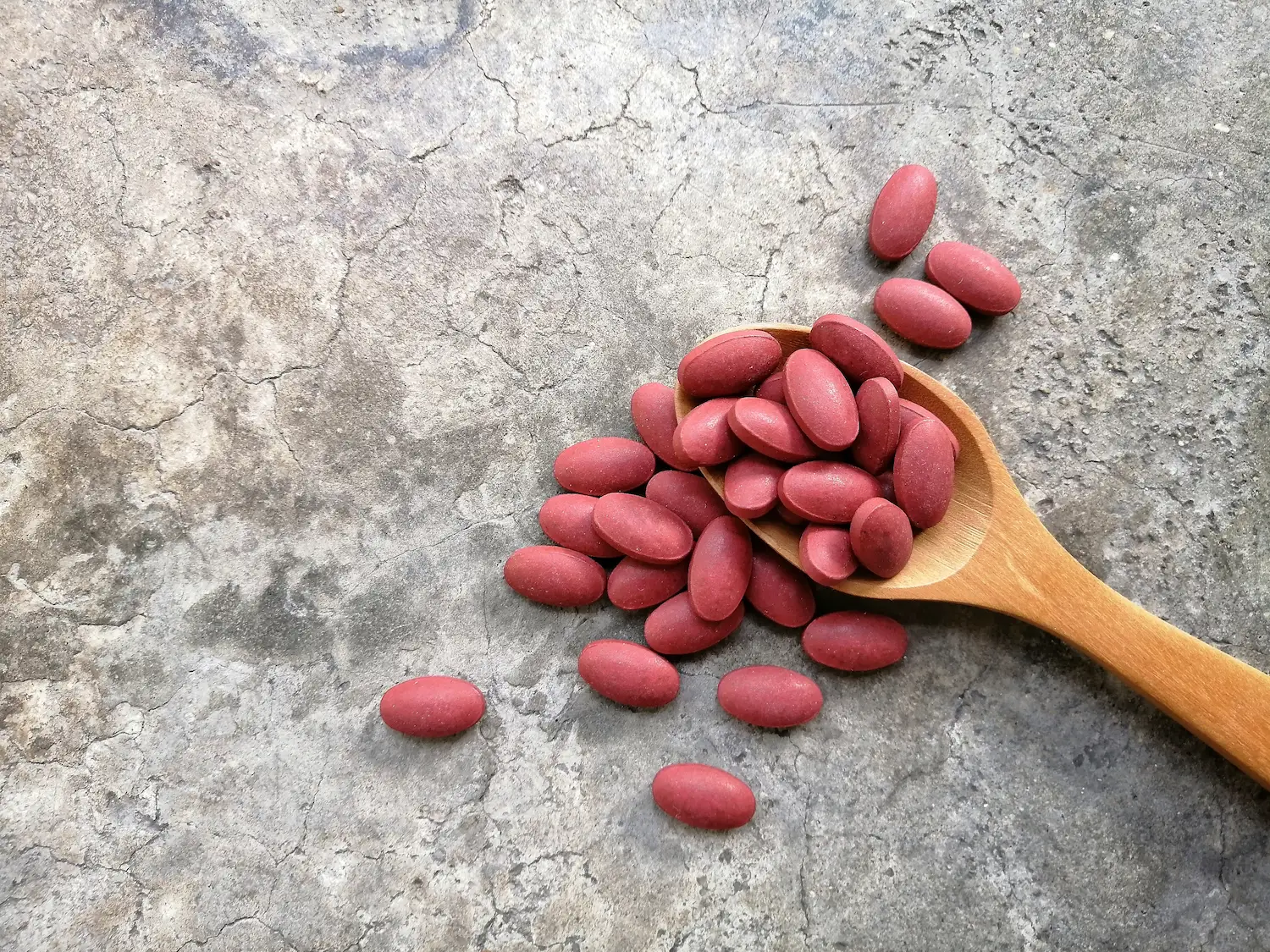
Excessive iron intake is dangerous. The upper tolerable limit is 45 mg per day total from food and supplements for healthy people over the age of 14. Do not exceed this dose unless instructed to by your health care provider. Ensure you keep any iron supplements away from young children to prevent accidental overdose, which has been associated with fatality. Many iron supplements resemble candy.
Disclaimer: Information provided is for general informational purposes only and is not a substitute for professional medical advice, nor does it establish a doctor-patient relationship. Always seek the advice of your qualified health provider. We assume no responsibility for errors or omissions in the content.
Find an Integrative Provider or Coach Near You
Search for integrative physicians and health experts. Partner with Andrew Weil Center-trained integrative providers who value your well-being, combine evidence-based methods to improve your health and merge conventional and natural approaches to address your mind, body, and spirit.
Visit the Tucson Clinic
Experience comprehensive care from Andrew Weil Center for Integrative Medicine clinic physicians, who offer expert consultations for various medical conditions while providing tailored recommendations for disease prevention.
Interested in becoming an integrative practitioner?
Ready to take the next step in your healing career? Discover how our educational offerings can help you blend science, compassion, and whole-person care. Enroll in our integrative health programs and gain the tools to combine modern medicine with holistic healing.
What is Integrative Medicine
Transform medicine and embrace whole person healthcare with an online course, in-person event, certificate program, or fellowship in integrative medicine.