Patient Education Library
Designed for both clinicians and the general public, these handouts provide practical, evidence-informed guidance that blends conventional medicine with complementary strategies. Within each handout you have the option to share or download a PDF.

Folate, a B Vitamin
WHAT IS IT?
Folate is a water-soluble B vitamin required for cellular development and repair, especially during times of rapid cell division (which is why it is so important during pregnancy). Folate deficiency hinders DNA synthesis and cell division. Folate is also required for the metabolism of several amino acids, including methionine. Folate deficiency can result in the decreased production of methionine, which in turn results in the build-up of homocysteine. Elevated levels of homocysteine are considered a risk factor for heart disease and other chronic diseases. Folate plays a key role in the processes that are essential for brain function.
CAUSES OF DEFICIENCY
Folate deficiency usually results from inadequate dietary intake, increased cellular demands during times of rapid cell division, such in pregnancy and cancer, decreased absorption (common with alcoholism), and MTHFR genetic variants.
Medications such as methotrexate, NSAIDS (nonsteroidal anti-inflammatory drugs) and sulfasalazine can also contribute to folate deficiency. Deficiencies in vitamin C and iron can also reduce the amount of folate absorbed in the body.
WHO MIGHT CONSIDER TAKING THIS?
- Pregnancy: Adequate folate status is crucial for the prevention of birth defects called neural tube defects (NTD), which include spina bifida and occur very early in pregnancy. For this reason, all women of childbearing age are encouraged to take a pre-natal vitamin pill.
- Anemia: Folic acid supplementation can also increase the number of red blood cells.
- Alzheimer’s Disease: Low folate levels have been associated with Alzheimer’s disease and dementia, and taking a folic acid supplement may improve cognitive decline.
- Depression: Folate supplementation may help in depression when folate deficiency is present, and is especially helpful when added to antidepressant medications.
PREPARATIONS AND DOSAGE
Folate is more bioavailable when taken on an empty stomach. Folate in food is destroyed by cooking at high temperatures.
SOURCES:
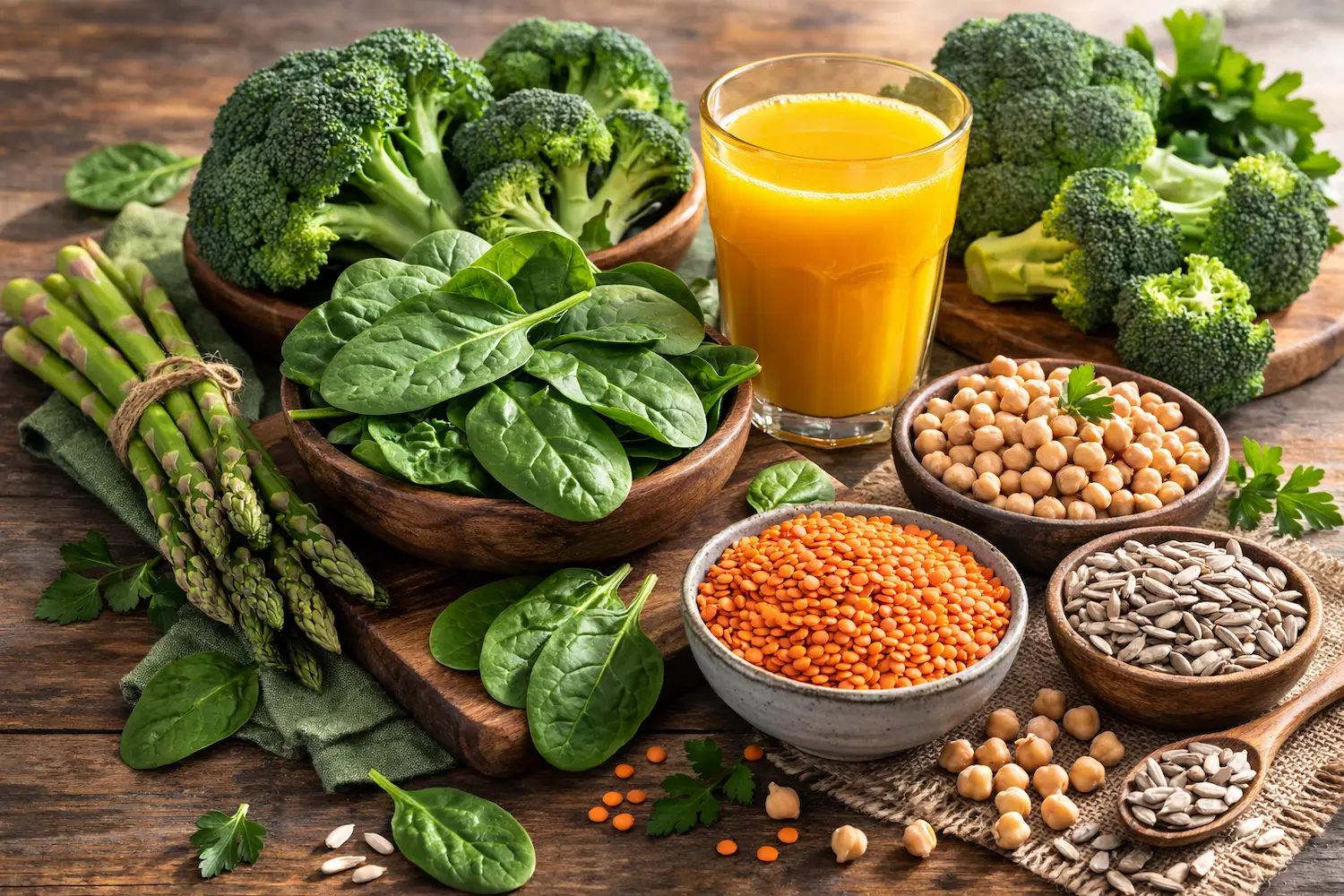
Green leafy vegetables such as spinach, turnip greens; asparagus, broccoli, orange juice, grains, lentils, garbanzo beans, and sunflower seeds are rich sources of folate along with fortified cereals.
DOSE:
The current recommended intake for folic acid is 400 micrograms per day. Folate requirements are increased in pregnancy (600 mcg per day) and lactation (500 mcg per day). Higher doses may be used in patients taking the medication methotrexate. Upper intake levels have been established at 1000 mcg/day for all adults.
It is estimated that 40–60% of the population carry an inherited defect in the gene methyltetrahydrofolate reductase (MTHFR). These individuals typically cannot convert folic acid into its active form, L-methylfolate. For these individuals, supplementation with L-methylfolate can compensate for this genetic defect, and higher dosages may be necessary.
Pediatric recommended dietary allowances vary by age and folate supplements should not be given without guidance from your clinician.
Disclaimer: Information provided is for general informational purposes only and is not a substitute for professional medical advice, nor does it establish a doctor-patient relationship. Always seek the advice of your qualified health provider. We assume no responsibility for errors or omissions in the content.
Find an Integrative Provider or Coach Near You
Search for integrative physicians and health experts. Partner with Andrew Weil Center-trained integrative providers who value your well-being, combine evidence-based methods to improve your health and merge conventional and natural approaches to address your mind, body, and spirit.
Visit the Tucson Clinic
Experience comprehensive care from Andrew Weil Center for Integrative Medicine clinic physicians, who offer expert consultations for various medical conditions while providing tailored recommendations for disease prevention.
Interested in becoming an integrative practitioner?
Ready to take the next step in your healing career? Discover how our educational offerings can help you blend science, compassion, and whole-person care. Enroll in our integrative health programs and gain the tools to combine modern medicine with holistic healing.
What is Integrative Medicine
Transform medicine and embrace whole person healthcare with an online course, in-person event, certificate program, or fellowship in integrative medicine.