Patient Education Library
Designed for both clinicians and the general public, these handouts provide practical, evidence-informed guidance that blends conventional medicine with complementary strategies. Within each handout you have the option to share or download a PDF.

Anti-Inflammatory Diet: Dietary Tips
Chronic inflammation, a key factor in serious illnesses like heart disease and Alzheimer’s, can be influenced by our lifestyle, including our diet. These dietary choices can contribute to reducing chronic inflammation and promoting overall health.
Please note that these are general recommendations, and individual needs may vary (e.g., more protein for heart failure, sarcopenia).
GENERAL TIPS
- Choose a variety of colorful, unprocessed foods.
- Opt for fresh foods over processed, fast food.
- Include plenty of fruits, vegetables, and healthy oils.
CALORIC INTAKE
- Most adults need 2,000 to 3,000 calories daily. Consider the use of a food tracking app to help track these numbers.
- Smaller, and less active people need fewer calories.
- Bigger, and more active people need more calories.
- Balance your calorie distribution: 40–50% from carbs, 30% from fat, and 20–30% from protein.
- Consume your calories within an 11-hour window, allowing your body to repair and replenish overnight.
PROTEINS
- Protein is crucial for various bodily functions. Daily protein intake: 80–120 grams for a 2000 calorie diet. A food tracking app is very useful at determining how much protein you are getting per day.
- Limit animal protein; focus on fish and pastured eggs if choosing animal sources.
- Embrace vegetable proteins, especially beans and soybeans.
CARBOHYDRATES
- Carbs provide energy and essential nutrients.
- Aim for 160–300 grams for a 2000 calorie diet. A food tracking app is very useful at determining how much carbohydrate you are getting per day.
- Prioritize vegetables, fruits, and whole grains over refined foods.
- Cut back on flour, sugar, and processed snacks; opt for beans, squashes, and sweet potatoes.
FATS
- Fats are energy sources and come in different forms: saturated, monounsaturated, and polyunsaturated fats.
- Limit saturated fats from red meat, fried foods, and processed goods.
- Limit polyunsaturated fats like canola oil, corn oil, soybean oil, sunflower oil, margarine, vegetable shortening.
- Use olive oil for cooking; consider coconut or avocado oil for higher temperatures.
- Include avocados, nuts, and omega-3-rich foods like salmon in your diet.
FIBER
- Essential for bowel health, cholesterol control, and weight loss.
- Aim for 25–30 grams daily through vegetables, fruits, legumes, seeds, and whole grains.
- Choose cereals with at least 4–5 grams of fiber per serving.
PHYTONUTRIENTS
- Found in plants, these compounds have anti-inflammatory effects and are naturally colorful.
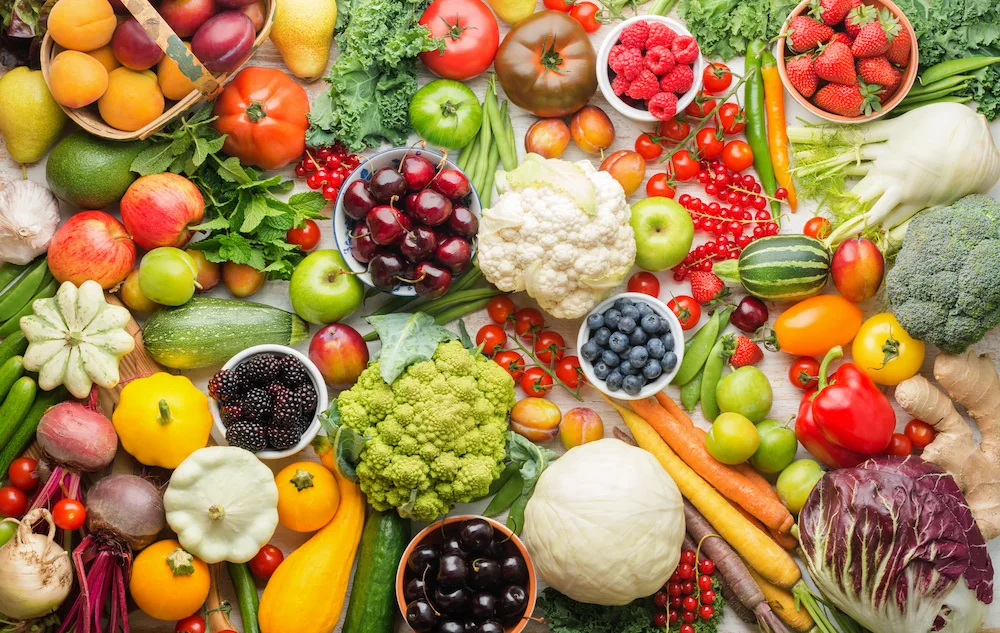
- Consume a variety of fruits, vegetables, and mushrooms from all colors of the rainbow. The more naturally colorful the food is, the more anti-inflammatory compounds it contains.
- Opt for organic produce and include cruciferous (cabbage-family) vegetables like broccoli, cabbage, brussels sprouts, and cauliflower regularly.
VITAMINS AND MINERALS
- Obtain daily nutrients from a diet rich in fresh foods, fruits, and vegetables.
- B vitamins and vitamin C are water-soluble; include whole grains, meats, eggs, and colorful fruits.
- Fat-soluble vitamins A, D, E, and K are stored in the body; get them from greens, fish, nuts, and seeds.
WATER
- Stay hydrated for optimal health; the amount depends on age, activity, and weight.
- Drink enough water for colorless or light yellow urine.
- Choose pure water or water-based drinks (unsweet tea, water with lemon, etc) throughout the day.
Disclaimer: Information provided is for general informational purposes only and is not a substitute for professional medical advice, nor does it establish a doctor-patient relationship. Always seek the advice of your qualified health provider. We assume no responsibility for errors or omissions in the content.
Find an Integrative Provider or Coach Near You
Search for integrative physicians and health experts. Partner with Andrew Weil Center-trained integrative providers who value your well-being, combine evidence-based methods to improve your health and merge conventional and natural approaches to address your mind, body, and spirit.
Visit the Tucson Clinic
Experience comprehensive care from Andrew Weil Center for Integrative Medicine clinic physicians, who offer expert consultations for various medical conditions while providing tailored recommendations for disease prevention.
Interested in becoming an integrative practitioner?
Ready to take the next step in your healing career? Discover how our educational offerings can help you blend science, compassion, and whole-person care. Enroll in our integrative health programs and gain the tools to combine modern medicine with holistic healing.
What is Integrative Medicine
Transform medicine and embrace whole person healthcare with an online course, in-person event, certificate program, or fellowship in integrative medicine.